





How Dye Sublimation Printing Supports High-Volume Instant Photo Production Leave a comment
What Happens When Hundreds of Guests Want Their Photos at Once?
Imagine you’re operating a photo booth at a busy wedding. The line is growing, guests are excited, and everyone wants to take home a physical photograph before leaving the event. Now imagine the same situation at a corporate activation, exhibition, or promotional campaign where hundreds of people may request prints within a few hours.
Here’s the challenge: Can your printing workflow keep up without creating long queues, inconsistent results, or unnecessary reprints?
High-volume instant photo production requires more than simply having a photo printer available. Businesses need a printing solution that can support fast output while maintaining consistent image quality throughout continuous operation. The choice of printing technology, media, consumables, workflow, and maintenance practices can all influence the final experience.
This is one reason dye sublimation printing has become an important technology for applications where photographs need to be produced quickly and delivered almost immediately.
Unlike traditional printing methods, dye sublimation technology is designed around a heat-transfer process that creates photographic output with smooth colour reproduction and a professional finish. When combined with suitable dye sublimation printer supplies and an efficient workflow, it can help businesses manage demanding instant photo printing requirements.
But how exactly does dye sublimation printing support high-volume photo production? And what should businesses consider when using this technology for events, photo booths, and other fast-paced applications?
Let’s explore how the technology works, where it fits best, and the factors that help businesses maintain reliable performance when the printing queue keeps growing.
Why Is High-Volume Instant Photo Production So Challenging?
At first glance, instant photo printing may appear simple: capture an image, send it to the printer, and hand the finished photograph to the customer.
In reality, professional environments introduce several additional challenges.
A business may need to:
- Process a large number of print jobs within a limited time
- Deliver photographs quickly
- Maintain consistent colour quality
- Produce sharp and detailed images
- Minimise reprints and media waste
- Keep the printer operating reliably
- Manage consumable supplies throughout the event
- Prevent long customer queues
During a quiet studio session, a small delay may not cause a major problem. However, at a busy event, even a few minutes of downtime can result in a growing queue and frustrated customers.
This is why high-volume photo printing requires a carefully planned workflow. The printer itself is only one part of the system. Businesses must also consider media compatibility, consumables, printer maintenance, job management, and the expected number of photographs.
Dye sublimation printing can be particularly suitable for these environments because the technology is designed to produce photographic prints efficiently while maintaining a consistent output quality.
How Does Dye Sublimation Printing Work for Instant Photos?
So, what makes dye sublimation printing different?
Dye sublimation is a thermal printing process in which colour is transferred onto specially designed photographic media using controlled heat. Instead of relying on liquid ink being sprayed directly onto the surface in the same way as many conventional inkjet systems, the process uses heat to transfer dye onto the print media.
The printing process typically involves multiple colour stages, with the dye being transferred through controlled heating. A protective layer may also be applied to the finished print, helping improve its resistance to everyday handling.
For instant photo applications, this process offers several practical advantages:
- Smooth colour transitions
- Detailed photographic output
- Consistent image reproduction
- Fast print production
- A professional finished appearance
- Prints that are convenient to handle immediately
The combination of these characteristics makes dye sublimation printers a popular choice for environments where photographs need to move quickly from image capture to physical delivery.
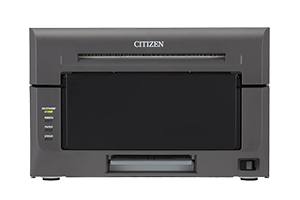
For example, professional dye sublimation photo printers from brands such as Citizen can be used in applications where businesses need to produce photographic prints efficiently. Depending on the required application and print format, examples within the Citizen photo printer range include the Citizen CX02 Digital Photo Printer and Citizen CY02 Photo Printer. These can be considered examples of the types of professional photo printing equipment businesses may evaluate when planning instant photo production workflows.
The specific printer selected should ultimately depend on factors such as expected print volume, required print format, portability, output requirements, and the business’s overall workflow.
Why Speed Matters in Event and Photo Booth Printing
Imagine two photo booths operating at the same wedding.
The first produces photographs efficiently, allowing guests to receive their prints shortly after taking their pictures.
The second experiences frequent delays, resulting in a growing queue.
Which experience is more likely to leave a positive impression?
For professional event businesses, speed is not simply a technical specification—it is part of customer service.
Dye sublimation printing can support fast-paced applications where customers expect their photographs almost immediately. This can be particularly useful for:
- Weddings
- Birthday celebrations
- Corporate events
- Trade exhibitions
- Promotional activations
- Retail events
- Entertainment venues
- School functions
- Sports events
- Tourist attractions
At these locations, people are often looking for an immediate experience. They take a photograph, interact with the booth or photographer, and expect to receive a physical print without a lengthy wait.
A well-designed dye sublimation printing workflow can help businesses reduce waiting times and keep the photo production process moving smoothly.
The result is a better experience for both the customer and the event operator.
How Does Dye Sublimation Printing Maintain Consistent Quality During High-Volume Production?
High-volume printing creates a unique challenge: the first print and the five-hundredth print should ideally look consistent.
Customers generally do not care whether a photograph was produced at the beginning or near the end of an event. They expect the same level of quality.
Several factors contribute to maintaining consistency.
Colour Reproduction
Photographs often contain skin tones, gradients, shadows, and bright colours that can reveal inconsistencies in the printing process.
A suitable dye sublimation printing system can help reproduce these colours smoothly and consistently when the printer, media, and settings are properly matched.
Image Detail
Event photographs may contain fine facial details, clothing textures, decorative backgrounds, and other visual elements.
Maintaining image clarity helps ensure that the final photograph looks professional rather than appearing soft or poorly reproduced.
Print Uniformity
High-volume production requires every print to maintain a similar appearance. Variations in colour, density, or finishing can become noticeable when customers compare photographs produced during the same event.
Compatible Media
The media used in the printing process also plays an important role. Businesses should select media that is compatible with their printer and intended application.
Photo Booth Businesses: The Role of Dye Sublimation Printer Supplies in High-Volume Printing
A professional printer is only as effective as the consumables and media used with it.
In high-volume instant photo production, businesses need to pay attention to their dye sublimation printer supplies because the printing process may continue for hours without significant breaks.
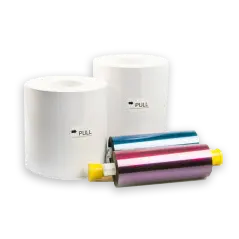
Depending on the printing system, the overall consumable setup may include:
- Specialised photo media
- Dye sublimation ribbons or colour panels
- Protective finishing layers
- Compatible printing accessories
Using the appropriate consumables helps businesses maintain a more predictable workflow.
For example, if the media and printing system are not properly matched, businesses may experience issues with print quality, feeding, output consistency, or overall efficiency. These problems can become more noticeable when the printer is handling a large number of photographs during a busy event.
Businesses should therefore consider more than just the purchase price of their sublimation printer supplies. They should also evaluate:
- Compatibility
- Expected print volume
- Print quality
- Availability
- Storage requirements
- Ease of replacement
- Supplier reliability
Keeping sufficient consumables available before a major event is also important. Running out of media or ribbons in the middle of a busy photo activation can interrupt the entire customer experience.
How Dye Sublimation Printing Helps Reduce Waiting Times
When customers attend an event, they usually don’t want to stand in a long queue waiting for their photographs.
This is particularly true for photo booths, where the speed of the printing process directly affects how many customers can use the service.
A streamlined dye sublimation printing workflow can help businesses:
- Process photographs efficiently
- Reduce delays between image capture and printing
- Deliver physical photographs quickly
- Handle multiple print requests
- Improve customer flow
However, the printer’s speed is only one factor.
The entire workflow must be efficient.
For example, the process may involve:
Image Capture → Image Selection → Print Processing → Dye Sublimation Printing → Quality Check → Customer Delivery
If any stage creates a bottleneck, the overall process can slow down.
This is why professional businesses should evaluate the complete workflow rather than focusing only on printer specifications.
A fast printer cannot compensate for poor job management, inadequate consumable supplies, or inefficient staff procedures.
What Happens When the Printing Workflow Is Not Optimised?
Here’s a scenario worth considering.
What if the printer is working perfectly, but the business still can’t keep up with customer demand?
The problem may not be the printer itself.
Several workflow issues can affect high-volume instant photo production.
Long Customer Queues
If photographs take too long to process or print, customers may have to wait longer than expected.
Reprints
Incorrect image selection, poor settings, or inconsistent output can result in unnecessary reprints, increasing both production time and media consumption.
Consumable Shortages
Running out of photo media or other essential supplies can bring production to a complete stop.
Printer Downtime
Poor maintenance or unexpected technical issues can interrupt printing during critical periods.
Inefficient Job Management
When multiple print jobs are processed simultaneously, poor workflow organisation can create confusion and delays.
Customer Dissatisfaction
At an event, the printing experience is part of the service. Delays and inconsistent quality can affect how customers perceive the entire business.
For this reason, professional photo printing businesses should treat the printing workflow as an essential part of event planning rather than an afterthought.
Where Is High-Volume Instant Photo Printing Used?
Dye sublimation printing can support a wide range of applications where photographs need to be produced quickly.
Event Photography
Event photographers often need to produce photographs while the event is still taking place. Fast printing allows guests to receive physical memories without waiting for post-event processing.
Photo Booth Businesses
Photo booths depend heavily on quick turnaround. Guests typically expect their photographs shortly after completing a session. Depending on the application, businesses may consider professional photo printers such as a Citizen CX02 Digital Photo Printer as an example of equipment used for fast photographic output.
Weddings
Wedding guests often enjoy receiving personalised photographs as keepsakes. Efficient printing can help the photographer or photo booth operator serve more guests during the celebration.
Corporate Events
Businesses may use instant photo printing as part of networking events, conferences, exhibitions, and brand activations. Portable or compact photo printing equipment can be particularly useful when the printing setup needs to be transported between different event locations.
Retail Activations
Retailers and brands can incorporate instant photographs into promotional campaigns, creating a more interactive customer experience.
Schools and Sports Events
Photography businesses covering school functions and sporting events may need to handle large numbers of photographs within a short period. Depending on the required output, businesses may evaluate different professional photo printer formats to match their production requirements.
Tourist Attractions
Tourist destinations and entertainment venues can use instant photo printing to provide visitors with physical souvenirs of their experiences.
Across all these applications, the central requirement remains similar: produce quality photographs quickly and consistently while keeping the workflow efficient.
How Can Businesses Improve Their High-Volume Photo Printing Workflow?
Dye sublimation technology can support high-volume production, but businesses still need to establish good operating practices.
Here are some important areas to consider.
1. Estimate Expected Print Volume
Before an event, estimate the potential number of photographs that may be produced.
This helps businesses prepare enough media and other consumables.
2. Select Suitable Printing Equipment
Choose a printer based on the expected workload, required output quality, print format, and operating environment.
A system designed for professional applications may be more appropriate for demanding event work than equipment intended for occasional personal printing.
3. Use Compatible Consumables
Printer media and other supplies should be suitable for the printing system.
Compatibility can influence output quality, reliability, and overall workflow efficiency.
4. Maintain the Printer
Regular maintenance can help identify potential problems before they become major interruptions.
Businesses should follow the manufacturer’s recommended maintenance procedures and address unusual print behaviour promptly.
5. Prepare Backup Supplies
High-volume events can consume more supplies than expected. Keeping additional media and other essential consumables available can reduce the risk of unexpected interruptions.
6. Train Staff
Employees or event operators should understand the basic printing workflow, including how to handle common issues and replace consumables when necessary.
7. Test Before the Event
A test print before the event can help identify issues with image settings, colour output, media compatibility, or workflow configuration.
These simple steps can make a significant difference when the printing workload increases.
How to Choose the Right Dye Sublimation Printing Setup
Not every business has the same printing requirements.
A photo booth operator working at weekend weddings may have different needs from a commercial event company handling multiple large-scale activations.
Before choosing a dye sublimation printing setup, businesses should consider:
Expected Print Volume
How many photographs will you produce during a typical event or working day?
Required Print Speed
How quickly should customers receive their photographs?
Print Format
Different applications may require different photographic output formats.
Image Quality
Consider whether the prints are casual event souvenirs or premium photographs where colour and detail are particularly important.
Consumable Availability
A reliable supply of compatible media and other printing consumables is essential for businesses that depend on continuous production.
Portability
Businesses operating at different event locations may need equipment that is easy to transport and set up.
Maintenance
Consider how easy it is to maintain the printer and access technical support when necessary.
Overall Workflow
The best setup is not necessarily the fastest printer. It is the system that works efficiently with the business’s complete workflow.
Can Dye Sublimation Printing Help Businesses Deliver a Better Customer Experience?
Ultimately, the value of instant photo printing goes beyond the physical photograph.
A customer may remember:
- How quickly they received their print
- Whether the photograph looked vibrant
- Whether the process was convenient
- Whether they had to wait in a long queue
- Whether the final print felt professionally produced
This means printing technology can directly influence the customer’s perception of an event service.
A well-managed dye sublimation printing workflow allows businesses to combine speed, convenience, and professional photographic output.
For event photographers and photo booth operators, this can help turn a simple photograph into a memorable part of the overall experience.
The technology is therefore not simply about producing prints. It is about creating a smooth connection between capturing the moment and delivering the memory.
Frequently Asked Questions
1. What is dye sublimation printing?
Dye sublimation printing is a thermal printing process that uses controlled heat to transfer dye onto specialised media. It is commonly used for photographic applications where smooth colour reproduction and fast output are important.
2. Is dye sublimation suitable for high-volume photo printing?
Yes. Dye sublimation printing can be suitable for applications that require continuous production of photographic prints, including events, photo booths, and commercial photo services.
3. What are dye sublimation printer supplies?
Dye sublimation printer supplies generally include specialised photo media and the appropriate dye sublimation ribbons or colour panels required by the printing system. The exact consumables depend on the printer model and technology.
4. Where is dye sublimation photo printing commonly used?
It is commonly used in event photography, photo booths, weddings, corporate activations, exhibitions, retail promotions, school photography, and other applications requiring fast photographic output.
5. How can businesses reduce delays during high-volume photo printing?
Businesses can reduce delays by preparing sufficient consumables, maintaining their printers, testing equipment before events, training staff, and creating an efficient workflow from image capture to customer delivery.
6. Is printer maintenance important for high-volume photo printing?
Yes. Regular maintenance can help businesses identify potential issues early and maintain more consistent printing performance, especially when equipment is used intensively.
7. How do businesses choose the right dye sublimation printer?
Businesses should consider expected print volume, output speed, image quality, print format, consumable availability, portability, maintenance requirements, and the overall workflow in which the printer will operate.
Conclusion
High-volume instant photo production requires more than simply having a printer at an event. Businesses need a complete workflow that combines suitable printing technology, compatible consumables, reliable equipment, proper maintenance, and efficient operations.
Dye sublimation printing can support this type of environment by helping businesses produce photographic prints quickly while maintaining a consistent and professional output. From photo booths and weddings to corporate events and promotional activations, the technology can help bridge the gap between capturing a moment and giving customers something tangible to take home.
However, the right results depend on the entire printing ecosystem. Choosing suitable dye sublimation printer supplies, preparing for expected print volumes, maintaining equipment, and planning the workflow carefully can all contribute to a smoother high-volume printing experience.
If you’re looking for professional printing solutions and reliable equipment for different business applications, Kepler Tech LLC, one of the leading printer suppliers in Dubai and across the UAE, can help businesses explore suitable printing solutions based on their specific operational and photographic printing requirements.