






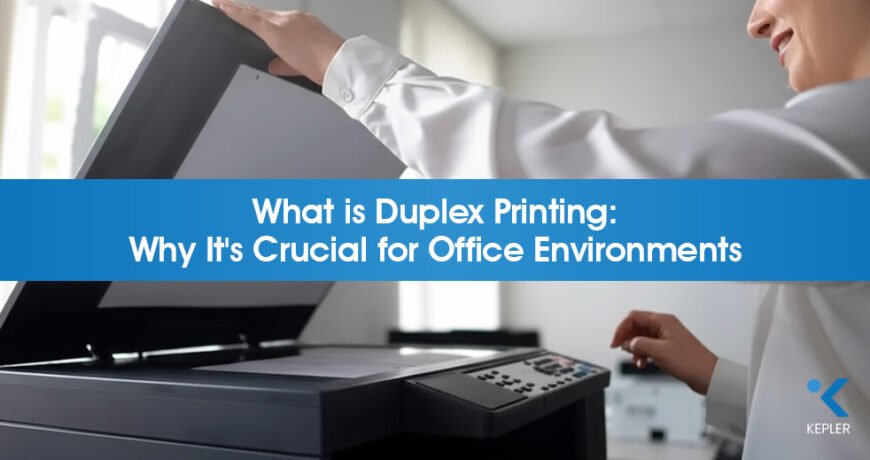
What is Duplex Printing: Why It’s Crucial for Office Environments Leave a comment
In today’s fast-paced business world, printing is far more than a background task; it’s a core operational function. From invoices and contracts to reports and presentations, high-volume office environments depend heavily on a reliable office printer to keep workflows running smoothly. Yet, as printing volumes increase, so do challenges like rising paper costs, cluttered document handling, frequent printer downtime, and growing environmental concerns.
In many organizations, printing inefficiencies go unnoticed because they occur in small increments, extra paper usage here, minor delays there. But over weeks and months, these inefficiencies compound into high operational costs. For IT managers and office administrators, this creates an ongoing challenge: how to improve productivity while maintaining cost control and sustainability.
So how do modern offices strike the right balance?
This is where duplex printing enters the conversation.
Imagine cutting your paper usage almost in half while still maintaining speed, professionalism, and document clarity. Imagine fewer paper refills, less waste, and cleaner filing systems. Duplex printing enables exactly that and much more.
Before we dive deeper, let’s pause for a moment and reflect: Is your office still printing the old way simply out of habit, or is it leveraging features designed for modern workloads?
Let’s explore why duplex printing is truly a game-changer for high-volume office environments and how it transforms everyday printing into a smarter, more efficient, and more sustainable operation.
What Is Duplex Printing?
Before discussing its impact, it’s important to clearly understand what duplex printing means in practical terms.
Duplex printing refers to a printer’s ability to automatically print on both sides of a sheet of paper without user intervention. The printer internally reverses the paper and prints the second side, creating a seamless two-sided document.
In contrast:
- Simplex printing prints on only one side of the paper.
- Duplex printing enables double-sided output, either automatically or manually.
Automatic duplex printing is especially valuable in high-volume office environments where manual page flipping is inefficient and prone to errors. Modern office printers integrate duplex mechanisms as part of their core design, ensuring consistent alignment and professional output.
Common office use cases include:
- Financial statements and invoices
- Internal policy documents
- Legal contracts and proposals
- Training manuals and onboarding materials
As printing volumes grow, duplex printing shifts from being a “nice-to-have” feature to an essential productivity tool.
Benefits of Duplex Printing in High-Volume Office Environments
Now let’s explore why duplex printing delivers such a strong impact in real-world office settings.
1. Significant Paper Savings and Reduced Waste
One of the most immediate and visible benefits of duplex printing is reduced paper usage. Printing on both sides of a page can reduce paper consumption by up to 50%, which is substantial for organizations printing thousands of pages each month.
This reduction leads to:
- Lower paper procurement costs
- Less storage space is required for paper supplies
- Reduced waste disposal and recycling volume
In large offices, even modest reductions in paper usage translate into measurable financial and operational gains.
2. Improved Productivity and Printing Efficiency
Efficiency in high-volume offices goes beyond print speed, it’s about uninterrupted workflows. Duplex printing improves overall printing efficiency by reducing the frequency of paper tray refills and minimizing user interaction with printers.
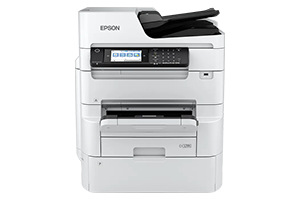
Business-grade devices like the Epson WorkForce Pro EM-C800 are designed to handle continuous workloads without performance degradation. Automatic duplex printing allows employees to send large print jobs confidently, knowing the printer will manage double-sided output without delays.
The result?
- Fewer interruptions
- Faster document turnaround
- Improved employee focus
3. Cost Savings Beyond Just Paper
While paper savings are often the headline benefit, duplex printing also delivers secondary cost advantages that accumulate over time.
These include:
- Lower ink and toner usage due to optimized print cycles
- Reduced energy consumption per document
- Less wear on printer components from excessive paper handling
For high-volume environments, these incremental savings add up quickly, improving the total cost of ownership of office printing solutions.
4. Enhanced Sustainability and Environmental Responsibility
Environmental responsibility is no longer optional; it’s a strategic priority. Duplex printing supports sustainable printing practices by directly reducing the demand for paper, which has downstream effects on forestry, water consumption, and energy use.
By adopting duplex printing, organizations demonstrate:
- Reduced environmental footprint
- Alignment with sustainability goals
- Commitment to responsible resource usage
This is especially important for companies aiming to strengthen ESG and CSR initiatives.
5. Better Document Organization and Professionalism
Double-sided documents are easier to manage, store, and archive. They reduce bulk in filing cabinets, simplify document handling, and create a more professional appearance.
For departments dealing with legal, compliance, or finance documentation, duplex printing enhances clarity and organization while maintaining document integrity.
Challenges and Limitations of Duplex Printing
Despite its benefits, duplex printing does present certain challenges that offices must address proactively.
1. Initial Investment Considerations
Duplex-capable printers may involve a higher upfront investment compared to basic models. However, for high-volume offices, this investment is typically offset within months through reduced operational expenses.
2. Paper Quality and Jam Frequency
Paper thickness and quality play a critical role in duplex printing reliability. Thin or low-grade paper may increase the likelihood of jams or misalignment.
Selecting appropriate paper and following manufacturer recommendations significantly reduces these risks.
3. User Awareness and Adoption
Even with duplex printers installed, many offices fail to realize the full benefits due to user habits. Employees may continue using simplex printing unless guided otherwise.
Setting duplex printing as the default option and providing brief training ensures consistent adoption.
Best Practices for Implementing Duplex Printing
To maximize the benefits of duplex printing, a structured approach is essential.
1. Analyze Printing Behavior
Review monthly print volumes and identify departments with the highest usage. This data-driven approach ensures duplex policies target areas where impact is greatest.
2. Invest in Business-Ready Duplex Technology
High-volume offices require reliable equipment. Printers like the Epson WorkForce Enterprise AM-C550 A4 Color Multifunction Printer are built to sustain demanding workloads while maintaining duplex performance and print quality.
3. Optimize Printer Settings
Configuring duplex printing as the default option immediately improves efficiency without disrupting workflows. Exceptions can still be made for specific document types.
4. Educate Employees
Short awareness sessions explaining the benefits of duplex printing encourage user buy-in. When employees understand how small changes contribute to larger goals, adoption improves naturally.
5. Monitor and Improve Continuously
Many modern office printing solutions provide usage reports. Reviewing this data periodically helps organizations refine policies and uncover additional optimization opportunities.
Duplex Printing and Sustainability
Duplex printing plays a measurable role in environmental sustainability.
By reducing paper usage, offices lower:
- Carbon emissions from paper manufacturing
- Transportation-related fuel consumption
- Waste generation
Organizations that prioritize duplex printing often report improved sustainability metrics and stronger alignment with green office initiatives. When paired with efficient inkjet printer technologies, duplex printing further minimizes energy consumption and material waste.
FAQs
1. Is duplex printing suitable for all high-volume offices?
Yes, especially offices that print large volumes of internal documents, reports, and records.
2. Does duplex printing affect print quality?
No. Modern printers maintain consistent quality on both sides of the paper.
3. Can duplex printing reduce long-term printing costs?
Yes. Reducing paper, energy, and consumable usage contributes to long-term savings.
4. Are duplex printers harder to maintain?
Not necessarily. Business-class printers are designed for reliable duplex operation with minimal maintenance.
5. Should duplex printing be set as the default?
For most offices, yes. This ensures consistent savings without relying on user behavior.
Conclusion
In high-volume office environments, printing efficiency directly impacts productivity, cost control, and sustainability. Duplex printing is no longer just a feature; it’s a strategic advantage. By reducing paper usage, improving workflows, and supporting environmentally responsible operations, duplex printing delivers value across multiple dimensions.
When paired with a capable office printer, duplex printing becomes a foundation for smarter document management and long-term operational efficiency.
For businesses seeking expert guidance and reliable printing solutions, Kepler Tech LLC, one of the leading printer suppliers in Dubai and across the UAE, offers business-ready technologies designed to meet modern office demands.
Ultimately, the question is not whether duplex printing matters but how quickly your office can begin fully benefiting from it.